
Government-Supported Paid Welding Apprenticeship Program
Paid Salary During Training: $22–$27 per hour
Want to become a welder but worried about high tuition costs or lack of experience?
A government-Supported paid welding apprenticeship program allows you to start learning welding skills worrying about tuition fees. and earn income while you train. This provides a practical path into a high-demand skilled trade.
What Is a Government-Supported Paid Welding Apprenticeship?
According to Apprenticeship.gov, registered welding apprenticeship programs provide a structured “learn while you earn” pathway supported by federal and state workforce systems.This type of program combines classroom instruction with real on-the-job training. Instead of attending a traditional trade school and paying large fees, participants learn directly in a work environment while receiving wages.
Government helps cover training costs, making these programs more accessible to individuals who want to enter the welding field but cannot afford private tuition.
Key Program Benefits
- No need to worry about tuition fees
- Paid training from day one
- No prior welding experience required
- Hands-on, on-the-job training
- Industry-recognized certification
- Job placement support after training
- High-demand skilled trade career
What Skills Will You Learn?
- Core welding techniques used on real job sites
- How to safely operate welding tools and equipment
- Reading blueprints and technical drawings
- Metal cutting, fitting, and assembly
- Weld inspection and quality control
How Long Does the Training Take?
Most welding apprenticeship programs run 6–48 months. During this time, you split your schedule between:
- Classroom technical instruction
- Hands-on, on-the-job training
Many programs start with basic skills and gradually move into advanced techniques as you progress.
How Much Can You Earn?
Apprentices start earning from the first day of training. After completion, many graduates move into full-time welding roles earning higher hourly pay, depending on location and skill level.
- $5,000 bonus at mid-completion of required on-the-job hours
- $5,000 bonus at completion of required on-the-job hours
Welding offers steady demand across construction, manufacturing, and industrial sectors.
Where Are These Programs Available?
Government-supported paid welding apprenticeship programs are offered in many states through workforce development agencies, apprenticeship sponsors, and approved training providers. Availability and eligibility requirements vary by location.
Interested individuals can review current opportunities through official workforce or apprenticeship program listings.
Who can Learn??
These programs are typically open to adults who are legally allowed to work in the United States and are interested in learning welding skills. Many programs accept beginners with no previous experience, as long as applicants are willing to learn and commit to the training schedule.
Some programs may have basic requirements such as minimum age, physical ability to perform welding tasks, and passing a simple assessment.
Age Requirement
| Age Group | Program Fit |
|---|---|
| Young Adults (18–25) | Build a trade career early without college debt |
| Career Changers (25–45) | Transition into a high-demand skilled profession |
| Experienced Workers (45–60) | Add certified welding skills for stable employment |
| Mature Learners (60+) | Structured, supportive training with predictable schedules |
🚀 Application Process
1.Review eligibility requirements for your state or area.
2.Submit basic information to the program provider.
3.Complete an initial screening or interview.
4.Begin training once accepted.
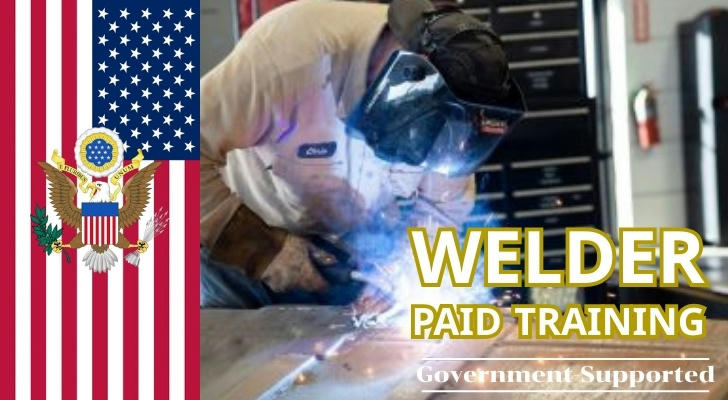
WELDER PAID TRAINING
For those looking to start a welding career without taking on student debt, a government-Supported paid welding apprenticeship program can provide a practical entry point.