
🩺 Government-Supported Paid CNA Training Program — Earn While You Learn
Earn While You Learn | Hourly Wages:$15.00–$17.50 per hour | State-Recognized Certification
To address workforce shortages, many states now support paid CNA training programs, often structured through registered apprenticeship or workforce-aligned training models. These programs allow participants to learn essential nursing assistant skills while earning an hourly wage, and to qualify for state-recognized CNA certification after successfully passing the required exam.
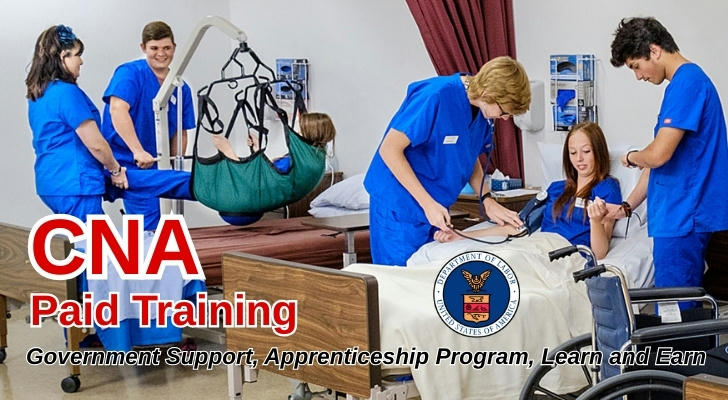
💰 Earn While You Learn: Paid From the Training Stage
One of the most important advantages of government-supported CNA training is the earn-while-you-learn model.
Instead of completing training first and seeking employment later, participants are placed in real healthcare settings during the training period and are paid for their work hours.
Based on typical CNA apprenticeship-style programs listed on Apprenticeship.gov:
- ⏱️ Paid work hours begin during training
- 💵 Hourly wages commonly range from $15.00 to $17.50 per hour, depending on state and employer
- 📈 Some programs offer wage progression as skills and responsibilities increase
This structure allows trainees to maintain income stability while developing job-ready healthcare skills.
🎓 State-Recognized CNA Certification After Completion
Upon completing the required training hours and passing the state competency exam, participants become eligible for:
- ✅ State-recognized CNA certification
- ✅ Placement on the State Nurse Aide Registry
- ✅ Legal eligibility to work as a CNA in licensed healthcare facilities
This certification is a mandatory requirement nationwide and is recognized by long-term care facilities, hospitals, and home health agencies.
🧠 What You Will Learn During Training
Training content is designed around actual CNA job responsibilities, ensuring a smooth transition from training to employment.
🛏️ Daily Patient Care
- Assisting with bathing, dressing, and eating
- Supporting patient mobility and safe transfers
- Providing routine care in long-term care environments
❤️ Clinical Fundamentals
- Measuring vital signs (temperature, blood pressure, pulse)
- Infection prevention and hygiene protocols
- Observing and reporting patient conditions to nurses
🗂️ Workplace Skills
- Basic medical documentation
- HIPAA compliance and patient privacy
- Team-based communication in clinical settings
👥 CNA Training Opportunities by Age Group
Ages 18–25: Entry Into Healthcare
- Start a healthcare career without a college degree
- Gain paid experience early
- Build a foundation for future LPN or RN pathways
Ages 25–40: Career Transition
- Suitable for individuals changing industries
- Earn income while learning a new, in-demand skill
- Access stable employment with nationwide demand
Ages 40–55: Skill-Based Reemployment
- Clear training structure and defined responsibilities
- Shorter training timelines compared to many other careers
- Healthcare values reliability and hands-on experience
Ages 55+: Long-Term Care Support Roles
- Age is not a barrier in CNA roles
- Predictable routines in long-term care settings
- Ongoing demand for dependable healthcare support staff
📝 General Eligibility Requirements
While requirements vary by state and program, most applicants need to meet the following:
- Be at least 18 years old
- Have legal authorization to work in the U.S.
- Pass required background screening
- Demonstrate basic English communication skills
- Be physically able to assist patients
No prior healthcare experience is required.
🚀 Career Outcomes After Training
After certification, CNA graduates may:
- Begin working immediately as certified nursing assistants
- Find employment in nursing homes, assisted living facilities, and hospitals
- Gain experience that supports advancement to LPN, RN, or other healthcare roles
📝 How to Apply
- Submit an application through an approved provider or participating healthcare employer
- Complete basic eligibility screening
- Attend an interview or orientation (if required)
- Pass required background clearances
- Receive acceptance and begin paid CNA training
✅ Conclusion: A Practical Pathway Into Healthcare
Government-supported paid CNA training programs offer a realistic and structured entry point into the healthcare workforce:
- ✔ Earn while you learn, with hourly wages around $15.00–$17.50
- ✔ No need to worry about tuition pressure during training
- ✔ Obtain a state-recognized CNA certificate after passing the exam
- ✔ Open to applicants across multiple age groups
- ✔ Directly connected to long-term healthcare employment
For individuals seeking meaningful work, stable income, and recognized credentials, paid CNA training remains one of the most accessible pathways into the U.S. healthcare system.