
🦷 Dental Assistant Programs with Degree in Wisconsin | Government-Supported Paid Apprenticeships
Government-Supported | Earn while you learn | Accredited Degree | Job Placement
In Wisconsin, Dental Assistants are becoming one of the state’s most strongly supported healthcare professions.
Facing persistent workforce shortages in dental clinics and healthcare systems, the Wisconsin Department of Workforce Development (DWD) officially launched the state’s first Registered Dental Assistant Apprenticeship Program in 2025, offering a practical pathway into healthcare through paid employment, structured education, and recognized credentials.
📌 This program is designed around real jobs, paid training, and degree or certification pathways, enabling participants to enter the dental workforce without taking on significant student debt.
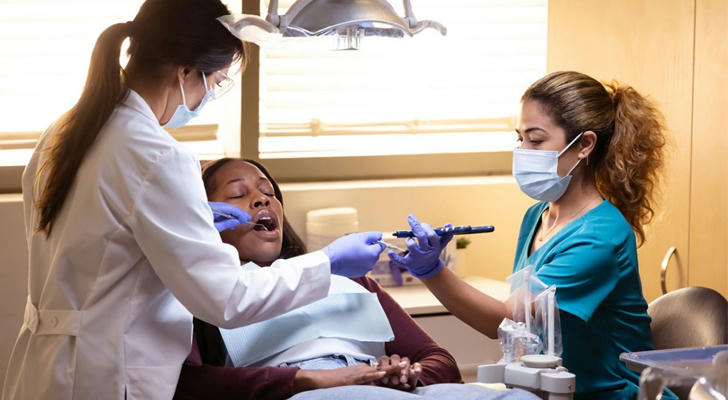
Why Is Wisconsin Investing in Dental Assistant Apprenticeships?
🔹 Addressing Critical Healthcare and Oral Health Workforce Shortages
Dental assistants play a vital role in dental care delivery, directly impacting:
- Clinical efficiency
- Patient safety
- Overall patient experience
The Wisconsin Department of Health Services (DHS) emphasizes that oral health is a core component of overall health, and a stable, well-trained dental assistant workforce is essential to expanding access to dental care across the state.
As a result, Wisconsin has chosen the Registered Apprenticeship model as a long-term workforce solution.
🔹 “Earn While You Learn” as a Practical Workforce Strategy
Traditional healthcare education often presents major barriers, including:
- High tuition costs
- Long training timelines
- Limited feasibility for working adults
Wisconsin’s approach is clear and distinctive: 👉 Learning happens on the job—and both work time and classroom time are paid.
Under the Dental Assistant Registered Apprenticeship Program:
- Classroom instruction is paid
- On-the-job training is paid
- Participants do not sacrifice income to gain education
This requirement makes Wisconsin’s apprenticeship system unique nationwide.
Wisconsin Dental Assistant Registered Apprenticeship Program: Key Facts
💡 Paid Apprenticeship Training
Program length: 15 months
Total training hours: 2,600 hours
- 592 hours of paid related instruction
- 2,008 hours of paid on-the-job training
Minimum hourly wage: $20–$22 per hour
Apprentices train in real dental clinics—such as Martin Dental in Altoona—while completing structured education.
💡 Accredited Education and Credential Pathways
- Classroom instruction provided by Chippewa Valley Technical College (Eau Claire Campus)
- Program participation supported through Wisconsin Department of Health Services grant funding
- Graduates gain long-term employability and may continue toward advanced dental or healthcare degrees
This model creates a clear pathway from entry-level training to professional credentials and career advancement.
The Wisconsin Department of Workforce Development (DWD) is a State Apprenticeship Agency (SAA) authorized and recognized by the U.S. Department of Labor. It represents and implements the systems and standards of the U.S. Department of Labor in workforce programs such as apprenticeships.
💡 Comprehensive, Job-Ready Skills Training
During the apprenticeship, dental assistants gain experience in core clinical and administrative functions, including:
- Assisting dentists during procedures and preparing treatment areas
- Cleaning and preparing dental instruments and equipment
- Managing and maintaining dental records
- Explaining dental procedures to patients
- Collecting patient medical histories through interviews
- Recording vital signs and other health information
- Providing basic dental or healthcare support services
- Creating patient aids or dental models
Collectively, these responsibilities reflect more than 200 clinical, administrative, and technical duties performed by dental assistants.
Dental Assistant Employment Outlook
According to the U.S. Bureau of Labor Statistics (BLS):
- Employment of dental assistants is projected to grow 8% from 2023 to 2033, faster than the average for all occupations
- Median annual wage for dental assistants in Wisconsin: approximately $48,000
With increasing demand for oral healthcare and an aging population, dental assisting remains a high-demand, stable healthcare career.
Wisconsin: A National Leader in Apprenticeships
- Home to the nation’s first registered apprenticeship program (established in 1911)
- 17,089 registered apprentices in 2025, the highest number in the program’s 112-year history
- More than 200 apprenticeship occupations and 2,600+ participating employers statewide
- Wisconsin law requires employers to pay apprentices for both work hours and classroom instruction
Healthcare has become one of the fastest-growing apprenticeship sectors in the state.
Benefits by Age Group
| Age Group | Best For | Key Benefits |
|---|---|---|
| 18–30 | Career Entry | Earn while you learn · Fast entry into healthcare |
| 31–50 | Career Change | Paid training · Stable, in-demand job |
| 50+ | Flexible Work | Meaningful work · Part-time or full-time options |
✅ How to Apply
1️⃣ Check eligibility
2️⃣ Apply to a program
3️⃣ Submit documents
4️⃣ Receive support
5️⃣ Start training
Conclusion
The Wisconsin Dental Assistant Registered Apprenticeship Program is more than a training course—it is a state-backed workforce solution designed to address healthcare labor shortages while creating sustainable careers.
By combining paid employment, structured education, and accredited credentials, the program removes financial barriers and builds a skilled dental workforce for the future.
For individuals seeking a stable healthcare career without the burden of high tuition or long academic commitments, dental assisting through a registered apprenticeship offers one of the most practical and policy-supported pathways available today in Wisconsin.